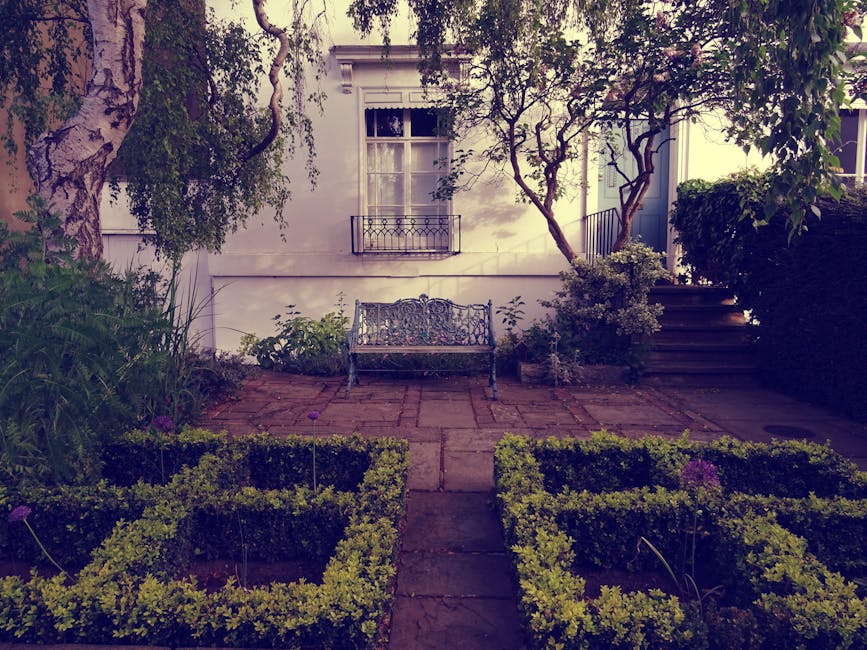
Chelsea gardeners guide to Walton Street courtyard beds
If you are looking after a small Chelsea courtyard, you already know the truth: every inch matters. A bed that looks generous on a drawing can feel tight once you add a bench, a pot or two, and that one awkward patch of shade that never quite behaves. This Chelsea gardeners guide to Walton Street courtyard beds is here to make sense of that. It covers how to plan, plant, maintain and improve courtyard beds in a way that suits the scale, light, privacy and style of Walton Street properties.
In Chelsea, courtyard gardening is rarely about making things bigger. It is about making them sharper, calmer and easier to live with. A good scheme needs to look elegant from the kitchen window, hold up through winter, and not become a weekly chore you resent by mid-May. Let's face it, nobody wants a courtyard bed that looks lovely for ten days and then turns into a tangle of thirsty stems and fallen leaves. Here, you will find a practical, local-minded approach that balances beauty with maintenance and real-world use.
Whether you are refreshing tired planting, replacing overgrown shrubs, or planning a completely new courtyard layout, the guide below should help you make better decisions, avoid expensive mistakes, and get a more settled result.
Table of Contents
- Why Walton Street courtyard beds matter in Chelsea
- How courtyard bed design and maintenance work
- Key benefits and practical advantages
- Who this is for and when it makes sense
- Step-by-step guidance
- Expert tips for better results
- Common mistakes to avoid
- Tools, resources and recommendations
- Law, compliance, standards, or best practice
- Options, methods, or comparison table
- Case study or real-world example
- Practical checklist
- Conclusion
- Frequently asked questions
Why Chelsea gardeners guide to Walton Street courtyard beds Matters
Walton Street sits in one of those parts of London where outdoor space tends to be valuable, visible and slightly unforgiving. Courtyard beds are not a background detail. They are often the first thing you notice when stepping out of a reception room or looking back at a terrace. In a place like Chelsea, that means the planting has to do several jobs at once: soften hard surfaces, give privacy, add structure, and still feel refined.
Courtyard beds also behave differently from wider garden borders. They dry out faster, get bounced heat from brick and stone, and can suffer from root competition if the space is enclosed by trees or neighbouring planting. On the other hand, they can be sheltered, which is a small blessing in winter. The point is that a courtyard bed should not be treated like an ordinary border with less soil. It needs its own strategy.
A well-designed bed can quietly change how a home feels. A narrow strip of planting can make a paved space seem more generous. A structured evergreen backbone can stop the garden looking bare in January. And a layered scheme can give you movement, scent and seasonal interest without creating clutter. That is the sweet spot.
Expert summary: the best Walton Street courtyard beds are usually not the most crowded ones. They are the ones with the clearest structure, the most suitable plants, and the simplest maintenance rhythm.
How Chelsea gardeners guide to Walton Street courtyard beds Works
The basic idea is straightforward: start with the site, not the shopping list. Courtyard beds in Chelsea succeed when design choices follow the conditions. That means checking light, shelter, drainage, access, soil depth and how the space is used day to day.
In practical terms, the process often works like this:
- Assess the site. Look at sun patterns, shade from buildings, wind tunnels, where water collects, and how people move through the courtyard.
- Decide the function. Is the bed mainly decorative, a privacy screen, a wildlife-friendly planting space, or a mix of all three?
- Match the plant palette. Choose plants that can handle the conditions rather than fighting them.
- Plan structure first. Use evergreen shrubs, small trees, trellis planting or clipped forms to anchor the scheme.
- Add seasonal layers. Mix perennials, bulbs and groundcover to give the bed depth across the year.
- Set a maintenance rhythm. Pruning, feeding, deadheading and irrigation should be realistic for the household or gardener.
A good Chelsea courtyard bed is often designed for visual control. It should look intentional from a distance and interesting up close. That usually means restraint. Too many plant species can make a small bed feel messy very quickly, especially where the eye has no place to rest.
Another important point: there is a difference between a bed that looks good in summer and one that works all year. In a compact London courtyard, winter structure matters more than many people realise. Without it, the space can look flat and a bit gloomy by late November. With it, the garden still feels alive even in a cold week with low light and wet paving.
Key Benefits and Practical Advantages
When courtyard beds are planned properly, they deliver more than decoration. They improve how the whole property feels, and often how it functions. That matters in Chelsea, where outdoor space is often used heavily but seen from only one or two key angles.
- Better privacy: layered planting can screen windows and soften sightlines without making the space feel boxed in.
- More usable space: a tidy, proportioned bed can make the paved area feel calmer and more spacious.
- Year-round interest: evergreens, bark, stems and winter-flowering plants keep the courtyard from going dormant visually.
- Reduced visual noise: a controlled planting palette makes small spaces feel more expensive and considered. There, said it.
- Lower long-term stress: sensible plant choices mean fewer failures, less replacement work and fewer emergency fixes.
- Better microclimate use: sheltered courtyards can support plants that would struggle in an exposed front garden, if the soil and watering are right.
There is also a lifestyle benefit that people sometimes miss. A well-kept courtyard bed changes how you use the home. Morning coffee by the window feels better when the border is clipped, green and settled. Evening light looks richer when it catches leaves rather than blank paving. Small thing, maybe. But not really.
Who This Is For and When It Makes Sense
This guide is for anyone responsible for a courtyard garden in or around Walton Street who wants a more polished result without overcomplicating the job. That includes homeowners, tenants with permission to improve planting, managing agents, and anyone working with a gardener or landscape team on a compact urban space.
It makes particular sense if you are dealing with one of these situations:
- the courtyard bed is overgrown and the shape has been lost
- plants are repeatedly failing because the site is too dry, shady or cramped
- the space feels hard, plain or unfinished
- you want more privacy from neighbouring buildings
- you need a scheme that is attractive but not high-maintenance
- you are planning a sale or letting and want the outdoor space to present well
If you already know you need broader help beyond planting, it may be worth looking at wider garden maintenance or, for a more structural refresh, landscape gardening. In compact Chelsea courtyards, the line between maintenance and redesign can blur pretty quickly.
To be fair, not every bed needs a full overhaul. Sometimes the right move is selective pruning, soil improvement and better plant spacing. A small intervention can do a surprising amount.
Step-by-Step Guidance
If you are starting from scratch or correcting an underperforming bed, work through the job in a logical order. Skipping steps is how small gardens become expensive ones.
1. Start with measurement and observation
Measure the bed properly, but also watch it through the day. Note where the sun falls at breakfast, lunchtime and late afternoon. In Chelsea courtyards, shade changes can be dramatic because of high walls, neighbouring buildings and reflected light. That odd little strip that looks bright in spring may sit in shadow by summer.
Check the soil depth too. Some courtyard beds are shallower than they look because of rubble, old hardstanding or buried layers from earlier works. If roots have very little room, plant choice needs to be careful.
2. Improve the growing conditions
If the soil is tired, compacted or thin, improve it before planting. Add organic matter where appropriate, but do not assume more compost is always better. In a small bed, over-enrichment can create fast top growth that looks flimsy and needs constant cutting back.
If drainage is poor, solve that first. Courtyards can trap water, especially where paving falls toward the bed edge. Equally, some are so free-draining that they dry out by noon. Both are manageable, but they require different answers.
3. Build the structure
Use the bed's structure to hold the design together. This might mean one or two evergreen shrubs, a clipped form, a small multi-stem, or training plants against a wall. The structure should not swallow the space. It should frame it.
In many Walton Street settings, subtle is better than showy. A strong outline with restrained planting usually ages more gracefully than a dense, fashionable mix that wants attention every week.
4. Choose a balanced planting palette
Think in layers:
- backbone plants: evergreen or semi-evergreen shrubs, small trees, or climbers
- seasonal layers: perennials and bulbs for interest through the year
- ground layer: low plants that cover soil, reduce weeding and soften edges
A simple palette often works best. For example, a courtyard bed might combine clipped evergreen structure, pale flowering perennials, and dark groundcover to make the planting feel finished. You do not need a jungle. You need rhythm.
5. Plan for access and maintenance
Ask one honest question: can someone actually maintain this bed without trampling the rest of the courtyard? If the answer is no, the design needs adjusting. Narrow access is a common issue in Chelsea townhouses and mews-style settings, so pruning points, irrigation access and stepping positions should all be thought through early.
6. Set the first-year routine
The first year matters more than people think. Newly planted beds need proper watering, light feeding, and attention to establishment. Miss that window, and the whole scheme can look patchy by August. Keep a simple routine and stick to it.
Expert Tips for Better Results
Good courtyard gardening is often about tiny judgement calls. The obvious choices are not always the best ones. Here are a few practical tips that tend to pay off.
- Use repetition. Repeating a few plants creates calm in a small space. It also makes the bed easier to maintain.
- Keep foliage in mind, not just flowers. In a confined courtyard, leaf shape and texture carry a lot of the design.
- Choose plants that can be clipped or contained. Soft, sprawling species can quickly overpower a narrow bed.
- Include winter structure. Think stems, shape and evergreen mass. Not just bloom.
- Water deeply, less often. Frequent shallow watering can create weak rooting. Deep watering is usually better if the soil allows it.
- Watch reflected heat. South-facing walls and pale paving can bake plants far more than expected.
- Leave breathing room. Crowding plants because they look small on purchase day is one of the classic mistakes. Been there, seen that, fixed that.
If privacy is a concern, do not rush to put up heavy barriers. In many cases, carefully placed planting can be more elegant than hard screening. If you want ideas in that direction, the guide on using tall potted plants for modern outdoor retreats is a useful companion read.
One more small tip: photograph the bed in winter, not just in May. It reveals whether the structure is actually doing its job. A scheme that disappears completely in bare months may need more backbone.
Common Mistakes to Avoid
Small courtyard beds rarely fail because of one huge error. More often, it is a chain of little ones. The good news is that most are fixable once you spot them.
- Overplanting the bed. This is the number one issue. Too many plants mean poor airflow, messy growth and constant competition.
- Ignoring the shade pattern. Sun maps change, especially in built-up streets. A plant that looked fine in a nursery may sulk in a courtyard.
- Using thirsty plants in dry soils. If you know watering will be inconsistent, choose better-adapted species.
- Forgetting maintenance access. Beautiful planting that cannot be reached properly becomes a nuisance very quickly.
- Mixing too many styles. Cottage, tropical, formal and woodland in one narrow bed? Usually not the best idea.
- Neglecting soil health. Surface mulch helps, but it is not a substitute for decent soil structure.
- Letting edges fray. In a courtyard, crisp bed edges matter. Wobbly lines make the whole space feel unfinished.
A surprisingly common issue is planting for the first month rather than the first year. Everything looks manageable when newly installed. It is late summer, six weeks later, when the real picture appears. Truth be told, the garden always tells on you eventually.
Tools, Resources and Recommendations
You do not need a shed full of kit for courtyard beds, but a few reliable tools and habits make life easier.
Useful tools
- sharp secateurs for regular shaping and deadheading
- a compact hand trowel for close planting
- a narrow fork for loosening soil in tight borders
- watering cans or a controllable hose setup for measured irrigation
- soft ties for training climbers and supporting stems
- mulch for moisture retention and weed suppression
Practical resources
If you are comparing maintenance packages or planning a bigger refresh, the pages on services overview, pricing and quotes and about us can help you understand how a local gardening team might approach a project like this. If the courtyard includes old beds that need stripping back first, garden clearance may be the right starting point.
For ongoing presentation, some gardens only need light but regular attention. Others need a seasonal reset and more thoughtful replanting. If you are not sure which camp your courtyard falls into, that is normal. Most real gardens sit somewhere in the middle, a bit messy, a bit brilliant, sometimes both.
It also helps to keep a simple garden record: what was planted, when it was cut back, and which side of the bed struggled through the summer. That kind of note saves guesswork next year. Not glamorous, but useful.
Law, Compliance, Standards, or Best Practice
Courtyard garden work in Chelsea is usually straightforward, but there are still practical standards worth respecting. If you are making changes to a shared courtyard, leasehold property, or managed building, check permissions before altering anything structural, attaching trellis, changing drainage, or removing established planting. In some buildings, there may be management rules that affect access, working hours, waste removal or work to boundary features.
Health and safety matters too, especially if the work involves ladders, power tools, old paving, or tight access. Professional gardeners and landscapers should work with sensible site procedures, and homeowners should expect tidy, careful handling of materials. If you are comparing providers, a clear health and safety policy and insurance and safety information are worth checking. It is boring until it is not.
Waste handling should also be sensible. Green waste, old soil, pots and cuttings should be separated where practical, and recyclable materials kept out of general rubbish if the project allows it. The page on recycling and sustainability gives a useful sense of that approach.
Best practice, in plain English, means this: work neatly, avoid damaging neighbouring property, choose durable materials, and do not overpromise what a small bed can sustain. In compact London gardens, restraint is often the most professional choice.
Options, Methods, or Comparison Table
There is more than one way to improve a courtyard bed. The right method depends on the condition of the space, how much change you want, and how involved you want maintenance to be.
| Approach | Best for | Pros | Trade-offs |
|---|---|---|---|
| Light refresh | Healthy bed with weak presentation | Quick, cost-conscious, minimal disruption | Won't fix deeper soil or layout issues |
| Replanting | Bed has the right shape but poor planting | Big visual improvement, better seasonal balance | Requires careful plant selection and establishment time |
| Structural redesign | Bed is awkward, cramped or failing repeatedly | Solves layout, drainage and access problems | More time, planning and usually more budget |
| Maintenance-led improvement | Busy household or managed property | Predictable upkeep, less upheaval | May never fully solve design weaknesses |
There is also a judgement call between formal and informal styling. In Chelsea, many courtyard beds look best with a degree of formality: clean lines, repeating forms, and controlled planting. But that does not mean stiff or overworked. A softer edge, a looser seasonal layer, or one relaxed climber can keep the space from feeling too severe.
If you are comparing methods, ask which one will still feel good in February. That question filters out a lot of pretty-but-fragile ideas.
Case Study or Real-World Example
Picture a narrow Walton Street courtyard with pale paving, a small dining set, and a long bed running along one side. The bed had become patchy over time: a couple of shrubs had outgrown their space, the soil had dried hard in summer, and the planting looked fine in spring but thin by October.
The practical fix was not a complete reinvention. It started with clearing back the cluttered growth, improving the topsoil, and reworking the structure. One evergreen framework plant was retained because it still gave the right height. Two awkward shrubs were removed. In their place went a simpler combination of compact structure, a few shade-tolerant perennials, and low groundcover to cover bare soil.
The biggest change was not dramatic colour. It was balance. The bed suddenly looked deliberate. The dining area felt calmer. Watering became easier because the planting was easier to reach. And, perhaps most importantly, the garden stopped asking for constant rescue.
That kind of result is very typical in smaller Chelsea courtyards. You do not always need more plants. Often you need fewer, better-placed ones. Little shifts, but they add up.
Practical Checklist
Use this checklist before planting, refreshing or hiring help for a courtyard bed.
- Have I measured the bed accurately, including depth and access points?
- Do I understand how much direct sun and shade the bed receives?
- Is the soil structure suitable, or does it need improvement first?
- Have I chosen plants that suit the site rather than the look alone?
- Is there enough evergreen structure for winter interest?
- Will the bed still look tidy after six months, not just six weeks?
- Can the space be watered, pruned and weeded without frustration?
- Have I checked permissions if the courtyard is shared or managed?
- Do I have a realistic maintenance plan?
- Have I allowed for mulch, replacement planting and seasonal tweaks?
If you can answer yes to most of those, you are in a strong position. If not, no panic. Better to catch the weak points now than after the first hot spell.
Conclusion
Walton Street courtyard beds work best when they are designed with the real conditions of Chelsea living in mind: limited space, changing light, privacy needs, and the desire for something elegant that does not become a burden. A thoughtful bed can make a small outdoor area feel polished, welcoming and quietly luxurious without shouting about it.
The main lesson is simple. Start with the site, choose the right structure, keep the planting disciplined, and plan for maintenance from the beginning. That is how you get a courtyard that still feels good in winter, not just when the roses are doing their thing. And honestly, that is where the value is.
Get a free quote today and see how much you can save.
If you are ready to improve a courtyard bed on Walton Street or nearby, the next sensible step is to review the space carefully, decide whether you need a refresh or a redesign, and speak with a local gardener who understands the pace and standards of Chelsea homes. Small spaces reward good decisions. Every time.
Frequently Asked Questions
What makes Walton Street courtyard beds different from ordinary garden borders?
They are usually smaller, more enclosed and more visible from inside the home. That means structure, maintenance and plant selection matter more than they would in a larger garden border.
How often should a Chelsea courtyard bed be maintained?
It depends on the planting, but most courtyard beds benefit from regular light maintenance rather than occasional heavy work. In practice, that often means checking growth, watering, weeding and tidying every week or two in the active season.
What plants work best in a shaded Chelsea courtyard?
Shade-tolerant plants, reliable evergreens and low-maintenance groundcover usually perform best. The exact mix depends on how much light the bed receives and whether the soil stays dry or moist.
Can a small courtyard bed still have seasonal colour?
Yes. Seasonal colour works well in small spaces if it is used sparingly and backed by a stronger structure. A few well-chosen flowering plants are usually better than a crowded mix of short-lived displays.
Do courtyard beds need irrigation in Chelsea?
Not always, but many do benefit from a sensible watering system or a reliable hand-watering routine. Sheltered urban beds can dry out faster than people expect, especially near walls and paving.
Is it better to replant or redesign a tired courtyard bed?
If the bed has a workable shape and decent soil, replanting may be enough. If the layout, drainage or access is poor, a redesign is usually the wiser long-term choice.
How do I keep a courtyard bed private without making it feel closed in?
Use layered planting, controlled height and repeated forms rather than a solid wall of greenery. The aim is soft screening, not shutting the space down. A bit of light and air goes a long way.
What is the biggest mistake people make with small courtyard planting?
Overplanting. It is very tempting to make a small bed look full on day one, but overcrowding usually causes weak growth, messy edges and more maintenance later.
Do I need permission to change a courtyard bed in a managed building?
Sometimes, yes. If the courtyard is shared, leasehold or governed by building rules, check permissions before altering hard landscaping, drainage, trellis or mature planting.
How can I make a courtyard bed look good all year?
Build in evergreen structure, use plants with good winter form, and avoid relying only on summer flowers. A bed that still has shape in January will always feel more complete.
Can I manage a courtyard bed myself, or should I hire help?
If the bed is small and fairly simple, many owners can maintain it themselves. If the planting has become overgrown, the access is awkward, or the space needs redesigning, professional help may save time and avoid costly mistakes.
What should I ask a gardener before starting work on a Walton Street courtyard bed?
Ask how they would assess light, drainage, soil and access; what they would keep or remove; and how they would handle aftercare. A good gardener should talk about the space as a system, not just as a plant list.